

Wellness Products for Daily Routine to Support Hydration and Self-Care
A useful wellness routine doesn’t need a crowded shelf. Start with a glass of water when you get up, then choose wellness products for your daily routine that support habits you want to make easier. Simple, repeatable choices can give your mornings a calmer rhythm and make room for small self-care check-ins.
It’s easy to assume a routine needs a long list of products to feel complete. In practice, a few thoughtful choices fit more naturally into your day, especially when they match your preferences and are simple to use.
Explore ways to support hydration, create a slower start, and pause for a quick check-in with yourself. You’ll also learn what to consider when choosing supplements with clear ingredient lists, so your routine feels considered, comfortable, and easy to return to.
Key Takeaways
- Make hydration easier by choosing a simple morning cue and products that fit your everyday habits.
- Review your self-care routine regularly and adjust it to what feels comfortable and practical for you.
- Look closely at supplement ingredients and choose options that keep their purpose and ingredient list clear.
- Separate useful wellness support from big claims by considering the evidence behind a product’s intended benefits.
1. Daily hydration and electrolytes
Make hydration easy to start: drink a glass of water when you get up. Keep a refillable bottle beside your coffee mug or breakfast bowl, giving water a visible place in your morning. A familiar cue can make drinking water part of getting ready, rather than another task to remember.
For a general daily reference, women should try to drink at least 92 ounces of water or other liquids every day, and men should try to drink 124 ounces every day. These amounts include liquids beyond plain water. Think about your usual drinks and meals as you build a routine, instead of treating one bottle as the whole day’s supply. Choose a bottle size that feels easy to carry and refill.
Use a refillable bottle as a simple reminder. Fill it before leaving home, take it to your desk, and refill it during a meal break. If you prefer smaller sips, choose a bottle that feels comfortable to hold. If you want fewer refills, consider a larger capacity. The best fit is the one you’ll actually bring along.
Electrolyte products offer another option for your hydration routine. Read the ingredients and serving directions, then decide whether the format suits your day. A stick pack, for example, may be easy to carry, while a ready-to-drink option needs no mixing. Keep plain water in the mix, too; an electrolyte product doesn’t need to replace every drink.
Hydrating skincare can be a separate self-care step. After showering, apply body moisturizer while it’s within reach, and place facial moisturizer beside your usual cleanser. Pair sunscreen with your morning routine. These simple cues make skincare a clear sequence of steps, rather than a search through a crowded shelf.
Build movement into the same routine without treating it as a hydration target. Adults should aim for 150 minutes of moderate aerobic activity every week, according to the U.S. Department of Health and Human Services. Take your bottle on a walk or keep it nearby during a movement break. Notice your feeling and adjust the routine to suit your day.
Reviewing and adjusting self-care practices
Review your routine as your schedule, skin, and comfort change. Notice which steps you repeat without effort, which products sit unused, and what feels irritating or inconvenient. Then adjust one part at a time. For example, move body moisturizer beside your towel if you often forget it after showering.
Use simple morning and evening sequences to keep care practical. In the morning, place sunscreen near your usual getting-ready items. At night, keep mouth-care products together, such as a toothbrush, toothpaste, and floss. Put laundry essentials where you sort clothes, and choose a detergent that suits your preferences. These placements make each step easier to remember.
After showering, apply body moisturizer while it’s within reach. For hair care, consider your washing pattern and how your scalp and hair feel afterward. One person may choose to wash their hair no more than three times a week. That’s an individual example, not a universal schedule. Let your comfort and your hair’s response guide any adjustments.
Skin barrier care starts with noticing how your skin responds to cleansing and moisturizing. Someone with chronically dry skin may skip morning face cleanser during winter to help prevent dehydration. That’s one personal approach, not a rule for everyone. If a cleanser leaves your face feeling uncomfortable, simplify your routine and notice whether a gentler step feels better.
Review the products themselves, too. A daytime antioxidant serum, facial moisturizer, body lotion, and sunscreen each have a place only if they suit your routine. Avoid adding several new steps at once; changing one product makes it easier to notice what feels comfortable. For a tidy refresh, explore simple self-care essentials that fit the habits you want to keep.
Check in with yourself during the day when something feels off. Notice whether frequent washing leaves your hands dry, or whether a laundry product makes clothes feel uncomfortable. Use those observations to adjust placement, timing, or product choice. A routine should serve your day, not become another list to manage.
4. Simple-ingredient wellness supplements
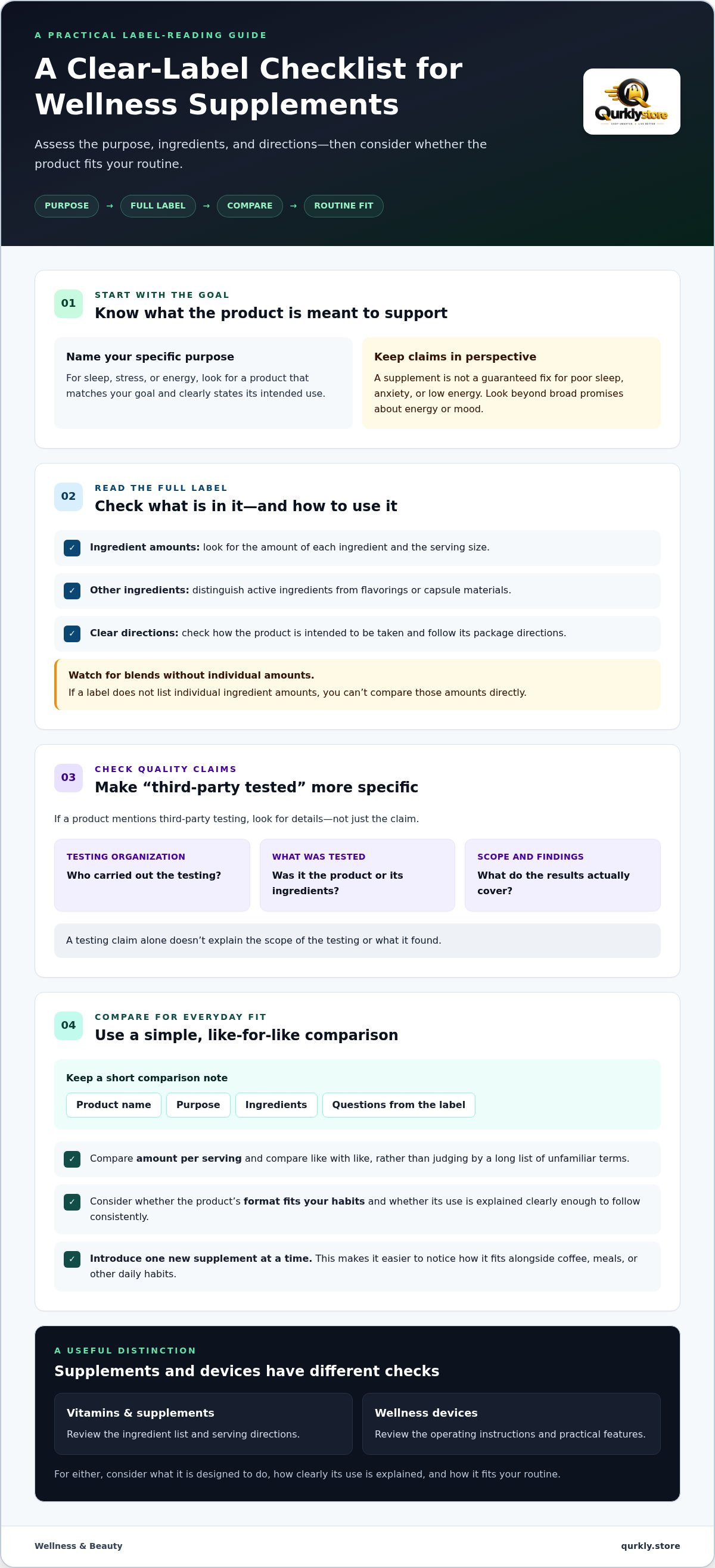
A shorter ingredient list can make a supplement easier to assess, but simplicity alone doesn’t show whether it suits your needs. Start with its purpose, read every ingredient, and note the serving directions. When comparing options, choose a product with clear ingredients and intended use, rather than one relying on broad promises about energy or mood.
For sleep, stress, or energy, choose a product that matches your specific goal and clearly lists its ingredients. Don’t treat a supplement as a guaranteed fix for poor sleep, anxiety, or low energy. Focus on its stated purpose and whether its format fits your habits.
Compare vitamins, supplements, and wellness devices by asking what each is designed to do and how you’ll use it. A vitamin or supplement has an ingredient list and serving directions; a device has operating instructions and practical features. Consider how it fits your routine, how clearly its use is explained, and whether you can follow its directions consistently.
For ingredient and quality checks, read the full label rather than relying on the front panel. Look for ingredient amounts, serving size, other ingredients, and clear directions. If a product mentions third-party testing, look for the testing organization, what it tested, and whether the results relate to the product or its ingredients. A testing claim alone doesn’t explain the scope or findings.
Keep a simple comparison note with the product name, purpose, ingredients, and questions raised by the label. Check the amount per serving and compare like with like, rather than judging by a long list of unfamiliar terms. For example, distinguish active ingredients from flavorings or capsule materials. If a label lists a blend without individual amounts, you can’t compare those amounts directly.
Introduce only one new supplement at a time and follow its package directions. This makes it easier to notice how it fits alongside coffee, meals, or other daily habits. Keep the label handy, and reconsider your choice if its purpose or instructions no longer match your routine.
4. Which wellness products are evidence-based and effective?
Start with the outcome you want to support, then assess the product’s specific claim. A meditation timer, for example, can structure a quiet pause, while a supplement makes claims about ingredients and the body. These products serve different roles, so don’t judge them by the same promise. Ask what each is designed to do and whether relevant evidence supports that specific use.
Choose wellness products for daily routine support by matching each item to one clear purpose. A bottle makes water easy to carry, but that feature alone doesn’t prove a health benefit. A sleep accessory may make bedtime more comfortable, but comfort isn’t proof that it improves sleep. Separate practical functions from claims about health outcomes.
For supplements, compare the evidence with the ingredient, amount, and intended use on the label. A finding about one ingredient doesn’t automatically support a formula containing several. Be cautious of broad promises about energy, anxiety, and sleep bundled together. The more specific the claim, the easier it is to assess whether the evidence addresses it.
To assess wellness products for daily routine use, write down the main claim and the evidence that supports it. For a device, consider its observable features, too. A timer can track a meditation session, and a reminder can prompt a habit. These functions are easy to evaluate in daily use; broader health effects require evidence beyond a feature list.
Keep a simple evaluation record with the product name, purpose, supporting evidence, and your own experience. Review it after using the item as directed. If a claim isn’t supported by relevant evidence, treat it as marketing rather than a proven result. This approach helps distinguish practical everyday support from promises that sound impressive but lack a clear basis.
Choose useful additions that fit your habits, then explore wellness and beauty essentials for simple ways to shape your routine.
Choose products for one clear purpose: a meditation timer can structure a quiet pause, while a sleep accessory may make bedtime more comfortable. For products claiming to support energy, stress, or sleep, check whether evidence supports the specific ingredients, amounts, and intended use. Be cautious of products promising all three outcomes.
Qurkly: Wellness & Beauty
Qurkly offers Wellness & Beauty products for readers choosing practical additions to everyday self-care. Explore the range for items that complement habits such as moisturizing after a shower or making a calmer start to the day. You can also browse Smart Gadgets & Living Decor for everyday-use finds that suit your space and routine. Choose what feels useful and easy to incorporate. Browse Qurkly’s selections at qurkly.store.
Make Your Next Routine Choice With Intention
A routine doesn’t need a dramatic reset. Pick one small change that feels useful, give it a place in your day, and notice whether it earns a lasting spot. The best wellness products for your daily routine support habits you genuinely want to keep, rather than adding pressure or clutter.
As you explore your next step, Qurkly brings together Wellness & Beauty, Smart Gadgets & Living Decor, and Pet Accessories. Choose what suits your everyday life, whether you’re refreshing a self-care ritual or finding a practical addition for your home. Keep your choices personal and your routine flexible. Small adjustments can make daily care feel more like your own.
Contact Qurkly to discuss your needs, and take the next step toward a routine that feels right for you.
Frequently Asked Questions
What wellness products are useful for a simple daily routine?
Useful choices are practical items you’ll reach for consistently, such as a refillable water bottle, moisturizer, or reminder device. Start with one need: keep a bottle near your work area, or place moisturizer beside the towel you use after showering. Choose products that are easy to use and store, then add another only if it serves a distinct purpose.
What are the best daily wellness products for sleep, stress, and energy?
Choose a supplement that matches your specific goal and has clear ingredients, intended use, and serving directions. Don’t treat it as a guaranteed fix for sleep, stress, or low energy.
Which wellness products are suitable for different budgets and lifestyles?
Choose products that fit your habits, such as a refillable bottle in a comfortable size or electrolyte products in a stick-pack or ready-to-drink format. The material gives no budget-based recommendations.
What safety risks and side effects should I consider with daily wellness products?
Read the full label and follow the serving directions. Introduce one new supplement at a time so you can notice how it fits your routine. For skincare, adjust a step if it feels irritating or uncomfortable.